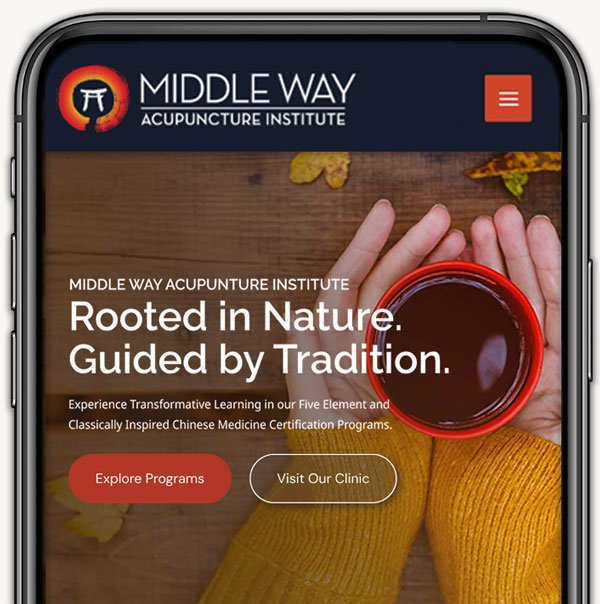
Project Overview
Link: mwai.edu
The Middle Way Acupuncture Institute (MWAI) is a nationally accredited acupuncture school in Washington State offering weekend-intensive programs in Five Element and Classical Chinese Medicine. Their audience spans working professionals, career changers, and wellness practitioners seeking flexible pathways to licensure.
Scope
To ensure an authentic visual representation of MWAI’s campus and community, I art-directed on-site photography sessions focused on key spaces and facilities. I also enhanced the visual library by selecting relevant stock images.
Photography & Visual Assets
Strategic art direction ensured the photography aligned with the website’s visual identity and communicated MWAI’s welcoming, professional atmosphere. The combination of authentic campus photography and professional stock images created a cohesive visual narrative, helping prospective students envision themselves at MWAI.
Problem Statement
The Challenge
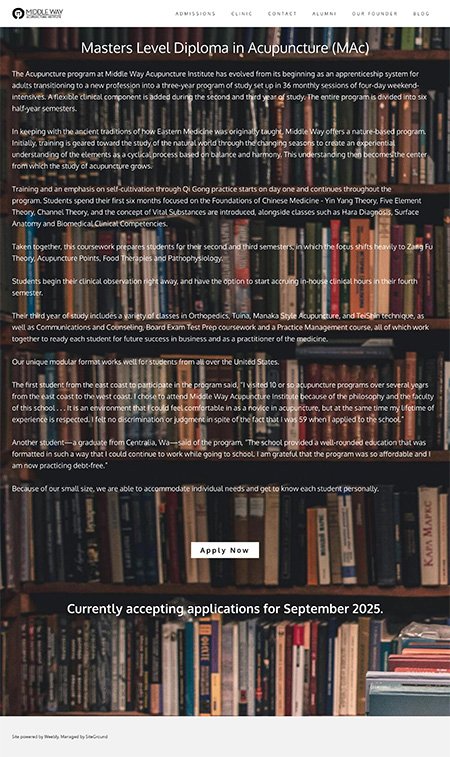
MWAI’s existing website was outdated, difficult to navigate, and failed to reflect the school’s evolving mission or engage prospective students. Key issues included:
- Disorganized site structure with unclear user flows for prospective students, alumni, and continuing education attendees
- No centralized design system or consistent brand application across the digital presence
- Limited SEO visibility for critical search terms like “acupuncture schools in Washington”
- Underperforming mobile experience creating barriers for the majority of prospective students
- Poor readability and accessibility with centered text throughout, insufficient contrast ratios, and typography that didn’t meet WCAG standards
- Manual, email-based processes for admissions and continuing education registration
- No clear competitive positioning or documented value propositions
These issues produced measurable business impact: difficulty attracting qualified prospective students, extended enrollment cycles, increased administrative burden, and missed opportunities to showcase the school’s strengths in flexible learning and small class sizes.
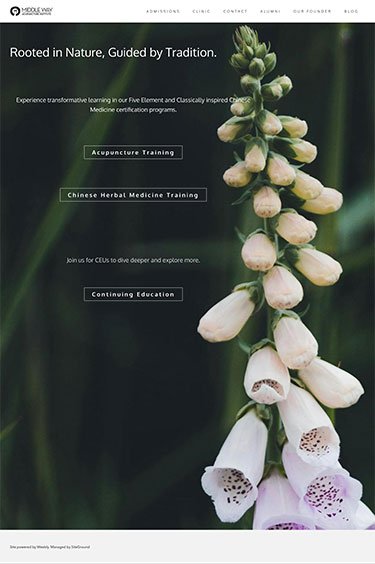
Research & Discovery
Methods Used
- Stakeholder Interviews: In-depth conversations to surface enrollment pain points, identify manual process bottlenecks, and uncover gaps in the digital presence.
- Stakeholder Kickoff Survey: Gathered input from MWAI leadership on design priorities, competitive inspiration, current challenges, and desired functionality.
- Student Survey: Surveyed current MWAI students to understand discovery channels, decision-making processes, and information gaps during their research phase.
- Competitive Analysis: Researched competitor websites to identify MWAI’s unique value propositions and market positioning opportunities.
- Content Audit: Evaluated existing content to identify gaps, redundancies, and opportunities for improved clarity.
- User Journey Mapping: Mapped pathways for prospective students, alumni, and continuing education attendees to pinpoint friction points.
Key Insights & Findings
The research revealed critical insights about MWAI’s strengths and the prospective student pain points the redesign needed to address:
MWAI’s Competitive Advantages
Flexible Learning Model
Monthly weekend-intensive format (Thursday-Sunday) allows students to continue working while pursuing education.
Small Class Sizes
Student-to-teacher ratios of 4:1 to 14:1 provide personalized attention and hands-on training.
Comprehensive Clinical Training
Over 500 hours of clinical experience through community clinics.
Multiple Acupuncture Styles
Integration of Five-Element, TCM, and Japanese Meridian Therapy traditions.
Affordable Tuition
Three-year program totaling $61,992 with flexible six-year payment plans.
User Personas
Based on stakeholder interviews and target audience research, I developed two primary personas representing MWAI's ideal students:
Rebecca Thompson, 34 - The Purpose-Driven Career Changer
Background
Professional (massage therapist, nurse, yoga instructor, corporate burnout) seeking meaningful, fulfilling work with work-life balance.
Demographics
Ages 25-50, predominantly female (70%), Bachelor’s degree or higher, income $40K-$90K, located primarily in Washington State.
Pain Points
- Career dissatisfaction and burnout in the current role.
- Time constraints require a flexible education format.
- Financial concerns about student loan debt.
- Fear of failure in launching their own practice.
- Need for a supportive community of like-minded practitioners.
Goals
Become a licensed acupuncturist, achieve financial independence, make a difference through holistic healing, and integrate acupuncture into wellness practice.
Decision-Making
Research-oriented, 3-12 month timeline, values testimonials and accreditation, seeks transparent pricing and flexible payment options.
Sophia Ramirez, 37 - The Wellness Entrepreneur Expanding Her Practice
Background
Established wellness professional (LMT, yoga instructor, holistic health coach) looking to expand service offerings and reduce physical strain.
Demographics
Ages 28-50, predominantly female (75%), certification or Bachelor’s degree in wellness, income $40K-$85K, self-employed or part-time practitioners.
Pain Points
- Physical burnout from hands-on wellness work.
- Cannot afford to stop working to pursue a full-time degree.
- Worried about tuition costs and return on investment.
- Lack of knowledge about business integration and licensing.
- Need for cost-effective ways to expand existing practice.
Goals
Enhance existing practice with acupuncture, increase financial stability, reduce physical labor demands, and find mentorship and hands-on training.
Decision-Making
Fact-driven but emotional, 3-12 month timeline, seeks career success stories from similar professionals, attends webinars before applying.
Validating the Personas
Direct student survey responses validated these personas, confirming that prospective students discover MWAI primarily through search engines, word of mouth, and the website. Key decision factors aligned directly with MWAI’s core strengths: flexible learning format, hands-on clinical training, and affordability. The stakeholder kickoff survey reinforced these findings by identifying design priorities and confirming the enrollment journey challenges.
Strategic Opportunity
MWAI had strong differentiators but was failing to communicate them effectively online. Both personas shared common needs, flexible learning, hands-on experience, affordable costs, and a supportive community, all of which aligned directly with MWAI’s strengths. The website needed to bridge the gap between the school’s value proposition and prospective students’ concerns about flexibility, clinical experience, and career outcomes.
User Journey Map
Rebecca Thompson
Career Changer Persona • Acupuncture Program Enrollment Journey
- Google search acupuncture schools
- Lands on MWAI homepage
- Views program overview
- Downloads program guide
- Reads student testimonials
- Compares tuition costs
- Checks accreditation info
- Attends virtual info session
- Emails admissions questions
- Visits campus
- Speaks with current students
- Completes online application
- Submits transcripts
- Schedules interview
- Receives acceptance letter
- Reviews financial aid options
- Commits to program
Design Process
Based on research findings, I developed a comprehensive strategy addressing both immediate website needs and long-term digital marketing growth, organized around three core pillars.
UX Strategy & Information Architecture
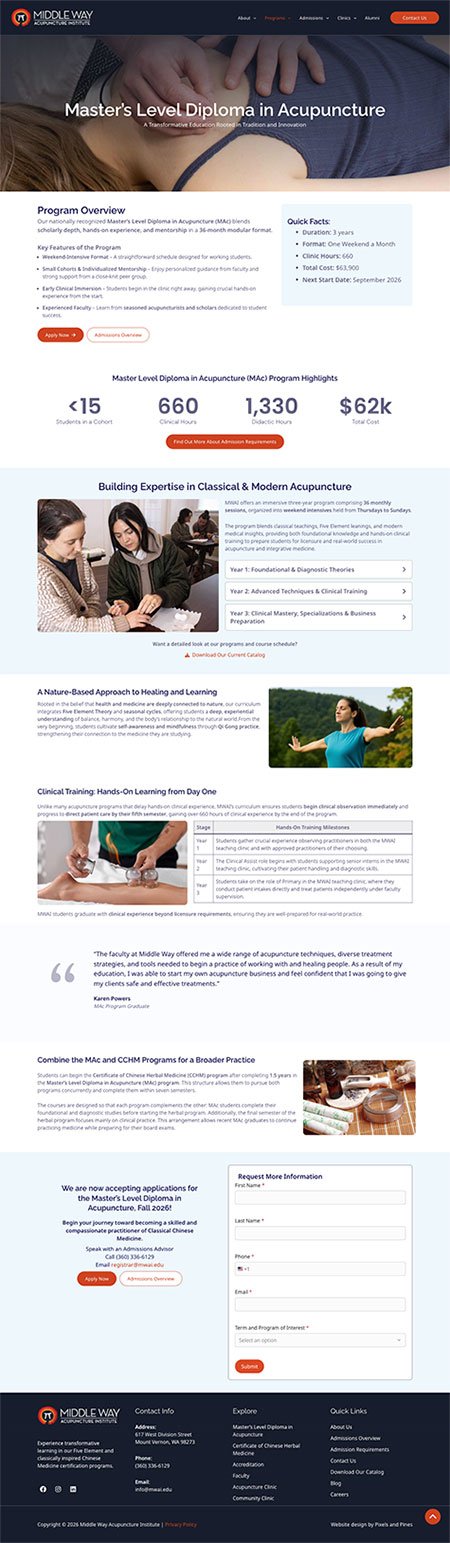
I mapped a new navigation structure for three primary audiences — prospective students, alumni, and CE attendees — and created clear conversion pathways with dedicated landing pages for Admissions, Continuing Education, and Clinic services. Content hierarchy was restructured to address prospective student concerns upfront: flexibility, clinical training, and affordability.
Design System & Visual Identity
I developed a modular design system with defined brand colors, typography, and spacing, and built a Figma component library with documentation for future scalability. Mobile-first layouts prioritized the 50%+ of users accessing the site on mobile, and I collaborated with the developer to implement designs using custom Spectra block patterns in WordPress.
Content Strategy & SEO Optimization
I rewrote program descriptions with clear, conversion-focused language and created trust-building content around accreditations, faculty expertise, and student success stories. Comprehensive keyword optimization targeted terms like “acupuncture school in Washington” and “Master of Acupuncture program,” supported by Google My Business optimization and improved metadata throughout.
 Before
 After
After
Phase 2 & 3: Growth Strategy
Beyond the initial launch, I created a comprehensive roadmap for ongoing digital marketing improvements:
Phase 2: Lead Generation
- Downloadable MAc program guides as lead magnets.
- Automated email marketing funnels for prospective students.
- Blog content strategy with SEO-focused topics.
- Social media video strategy.
- Google and social media advertising campaigns.
Phase 3: Advanced Engagement
- Virtual campus tour implementation.
- Webinars and live Q&A events.
- Online clinic scheduling with Acusimple integration.
- Alumni network and community engagement features.
- Advanced analytics and conversion tracking.
Marketing Deliverables
In addition to the website strategy, I created tangible marketing assets to support MWAI's enrollment efforts:
- Designed a professional marketing flyer for the Master of Acupuncture (MAc) program.
- Developed email marketing templates for prospective student nurture sequences.
- Created social media content guidelines and post templates.
- Documented best practices for conversion optimization and A/B testing.
Solution & Results
Launch Performance Exceeded Our Goals
The new website delivered immediate, measurable impact on MWAI’s digital presence and user engagement, exceeding every established KPI.
96%
Increase in unique visitors
167%
Increase in MAc program interest
100%
SEO Site Score
- Website Traffic: Unique visitors nearly doubled, from a monthly average of 284 to 557, validating the SEO strategy and content optimization.
- Program Interest: MAc program interest surged, confirming strong engagement from target personas (career changers and wellness professionals).
- SEO Excellence: Establishing a strong foundation for ongoing organic growth.
Qualitative Impact
- Improved Clarity: Prospective students could easily understand program options, requirements, and pathways to licensure.
- Enhanced User Flow: Clear navigation to key decision-making pages (Admissions, CE, Clinic) reduced friction in the enrollment journey.
- Brand Consistency: Cohesive visual identity across all pages reinforced MWAI's professionalism and credibility.
- Scalable Foundation: Modular design system and documented components enabled the MWAI team to maintain and expand the site efficiently.
- Strategic Roadmap: A three-phase implementation plan provided clear direction for ongoing digital marketing growth.
Teaching acupuncture is my life's work. When enrollment dropped and we considered closing, I was devastated. Pixels & Pines transformed our website and within three months we filled our programs to capacity. They didn't just save our school, they made sure I could keep doing what I love.
Long-Term Strategic Benefits
- Established a foundation for data-driven decision making with analytics-ready tracking.
- Created a self-service resource that reduced dependency on external support.
- Positioned MWAI competitively in the acupuncture education market.
- Enabled future marketing initiatives through documented strategy and assets.
- Provided a clear framework for measuring ROI on digital marketing investments.
Key Deliverables
This project resulted in comprehensive strategic and design deliverables that support MWAI's digital presence today and provide a roadmap for future growth.
Strategy & Research
- Competitive Analysis Report: Documented MWAI's key benefits, features, and market positioning relative to competitors.
- Student Survey Results: Analyzed current student responses on discovery channels, decision-making factors, and information needs.
- Stakeholder Kickoff Survey Results: Documented leadership priorities for design, functionality, and competitive positioning.
- User Personas: Detailed profiles of two primary audience segments (purpose-driven career changers and wellness entrepreneurs) with demographics, pain points, goals, and decision-making behaviors.
- User Journey Maps: Mapped pathways for prospective students, alumni, and CE attendees.
- Digital Marketing Plan: Comprehensive cost-effective strategy including timeline, deliverables, and phased approach for organic growth.
- Phased Implementation Roadmap: Three-phase plan detailing website improvements, lead generation strategies, and advanced engagement tactics.
- SEO Strategy Document: Keyword research, metadata templates, and ongoing content recommendations.
Design System & Website
- Figma Design Library: Complete component library with reusable blocks, style guide, and documentation.
- Responsive Website: WordPress site built with custom Spectra block patterns and Astra Pro theme.
- Mobile-First Layouts: Optimized designs tested across all device sizes.
- Brand Guidelines: Comprehensive documentation of colors, typography, spacing, and visual identity.
Marketing & Content
- MAc Program Flyer: Professional marketing collateral for program promotion.
- Social Media Strategy & Templates: Guidance for Instagram, Facebook, and LinkedIn with post templates focusing on student testimonials, educational content, campus life, and clinic promotions.
- Blog Content Strategy: Monthly blog post topics and templates optimized for SEO (e.g., "How to Become an Acupuncturist," "5 Myths About Acupuncture").
- Email Marketing Framework: Quarterly newsletter templates for prospective students, current students, and clinic promotions with automated nurture sequences.
- Lead Generation Framework: Downloadable resources, form designs, and conversion pathways.
- Local SEO Guidance: Google My Business optimization strategy and review generation recommendations.
- Conversion Optimization Guide: Best practices for CTAs, landing pages, and A/B testing.
Training & Documentation
- WordPress Training: Documentation and guidance for MWAI's internal team.
- SEO Best Practices: Ongoing recommendations for maintaining and improving search visibility.
- Analytics Setup: Google Analytics and Microsoft Clarity implementation with custom event tracking.
Reflection & Learnings
What Worked Well
- Research-Driven Approach: The competitive analysis, stakeholder interviews, student survey, and stakeholder kickoff survey provided crucial insights that shaped the entire strategy. Creating two distinct personas allowed us to craft messaging that resonated with both segments while highlighting MWAI's unique value proposition (flexible learning, small class sizes, comprehensive clinical training). The student survey validated that prospective students typically discover MWAI through search engines and word of mouth, confirming our focus on SEO and content strategy.
- Holistic Strategy: By combining UX design, SEO, content strategy, and digital marketing planning, we created a cohesive solution that addressed both immediate needs and long-term growth, demonstrating that technical excellence and user experience work in harmony.
- Scalable Design System: Creating a modular Figma library with reusable components enabled the team to maintain consistency across the site.
- Phased Implementation: The three-phase roadmap gave MWAI a realistic, prioritized path forward that made recommendations actionable rather than overwhelming.
Challenges Faced & How I Overcame Them
- Limited Existing Analytics: MWAI lacked comprehensive data on previous website performance. I implemented robust tracking from the outset and set clear benchmarks for measuring success. Early engagement metrics (71% scroll depth, 2.7 pages/session) validated UX decisions and established a baseline for ongoing optimization.
- Multiple Audience Segments: Designing for prospective students, alumni, and CE attendees required careful information architecture planning. I created clear navigation paths and dedicated landing pages for each audience, reinforcing the value of audience-first sitemap planning over organization-first structure.
- Technical Constraints: Working within WordPress and the Spectra/Astra Pro ecosystem required balancing ideal design with platform capabilities. Close collaboration with the developer produced creative solutions that achieved UX goals while remaining technically feasible and maintainable.
- Manual Process Dependencies: Many of MWAI’s enrollment and CE registration processes were email-based. While Phase 1 couldn’t resolve all process issues, I documented opportunities for future automation and integration (such as Acusimple for clinic scheduling) in the phased roadmap, acknowledging process gaps honestly rather than over-promising immediate fixes.
What I Would Do Differently
- Usability Testing During Design Phase: While student surveys validated personas with real feedback, moderated usability testing with prospective students during wireframing would have provided more granular insights into navigation patterns and information hierarchy preferences.
- More Granular Analytics Planning: Establish more detailed conversion tracking and event monitoring from day one to measure specific user behaviors tied to KPIs (form submissions, video views, program page visits by persona type).
- Documented Content Calendar: A specific 3-6 month content calendar with scheduled blog topics, social media themes, and email campaigns would have given MWAI’s team more concrete guidance for Phase 2 implementation.
Impact on My Practice
This project reinforced the value of combining UX strategy, visual design, content strategy, and digital marketing planning into a holistic approach. By addressing the entire digital ecosystem rather than just the website interface, I delivered sustainable, strategic value for MWAI that extends well beyond the initial launch.


